Chamonix did not begin as a ski resort. For centuries, life in this high Savoyard valley revolved around farming, livestock, hunting and the difficult routes through a spectacular but feared mountain landscape. Its transformation into a global mountain name came through glaciers, science, alpinism, railways and winter sport—without ever making the high mountains harmless.
Before the tourists: a valley facing the glaciers
In the 18th century, the inhabitants of what visitors called Chamouny lived with long winters and limited farmland. The great glaciers were not yet scenery for a holiday: they were an imposing, changing presence at the end of the valley.
That began to change in 1741, when the English travellers William Windham and Richard Pococke visited the Mer de Glace. Their account made the glacier famous well beyond the Alps. Curious visitors followed, first to see the ice and then to seek out the entire Mont Blanc massif. At the time, reaching Montenvers could mean travelling by mule.
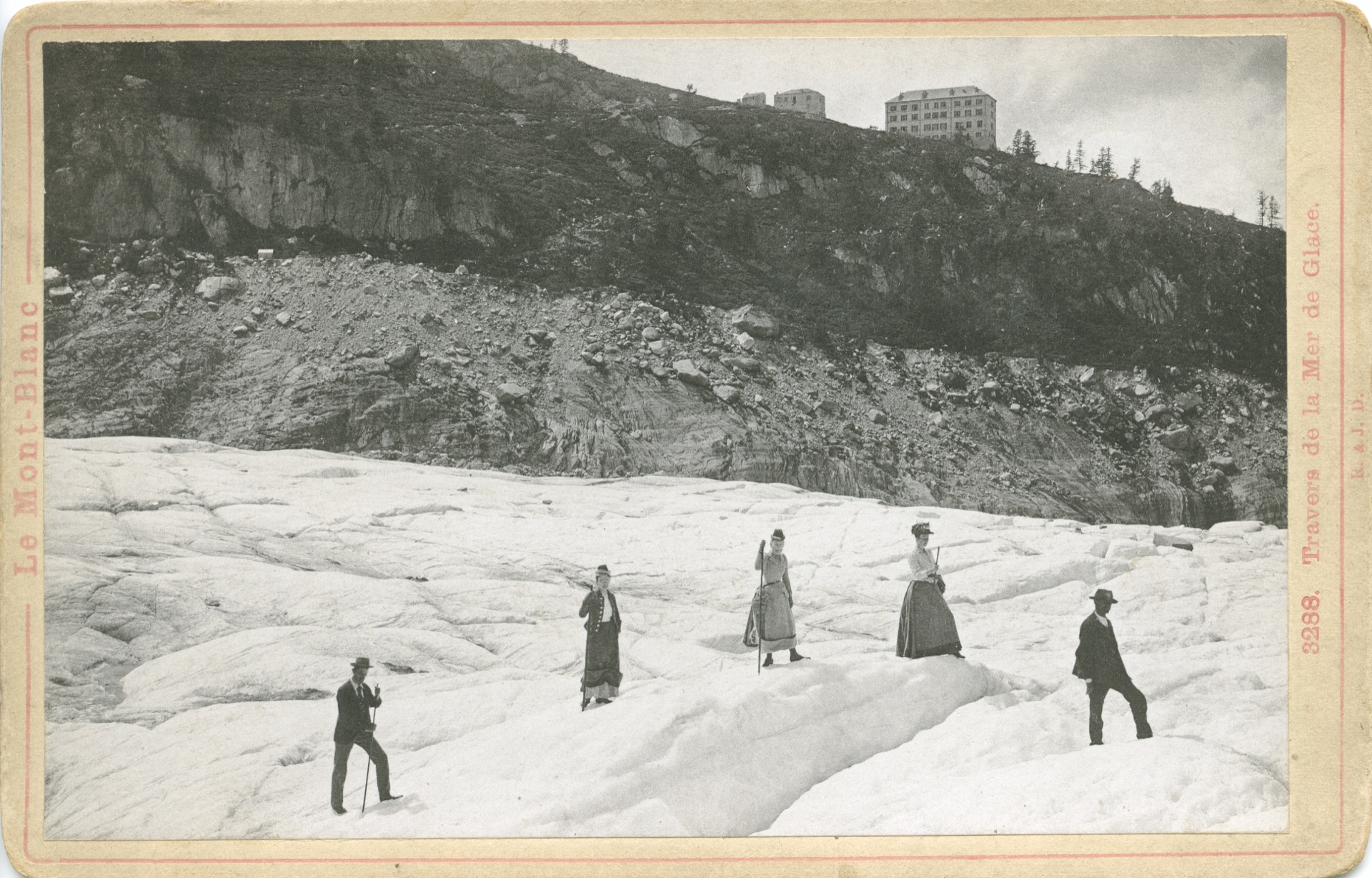
The image below captures that earlier relationship with the landscape: visitors on the Mer de Glace around 1900, with the Montenvers hotel above them.
1786: Mont Blanc changes the scale of the story
The Genevan scientist Horace-Bénédict de Saussure offered a reward in 1760 to whoever found a route to the summit of Mont Blanc. On 8 August 1786, the Chamoniards Jacques Balmat and Dr Michel-Gabriel Paccard reached the top. The climb is widely regarded as a founding moment of modern alpinism.
Its importance was not simply symbolic. It made Chamonix a destination for scientists, artists and wealthy travellers, while creating demand for the knowledge held by local people. In 1821, the Compagnie des Guides de Chamonix was established, giving a formal structure to guiding in terrain where experience and judgment were essential.
From mule paths to railways
Hotels multiplied as the summer mountain trade grew. The arrival of the railway in the valley in 1901 made Chamonix far easier to reach from the wider French and European network. A second, more audacious line then targeted the valley’s star attraction: the Mer de Glace.
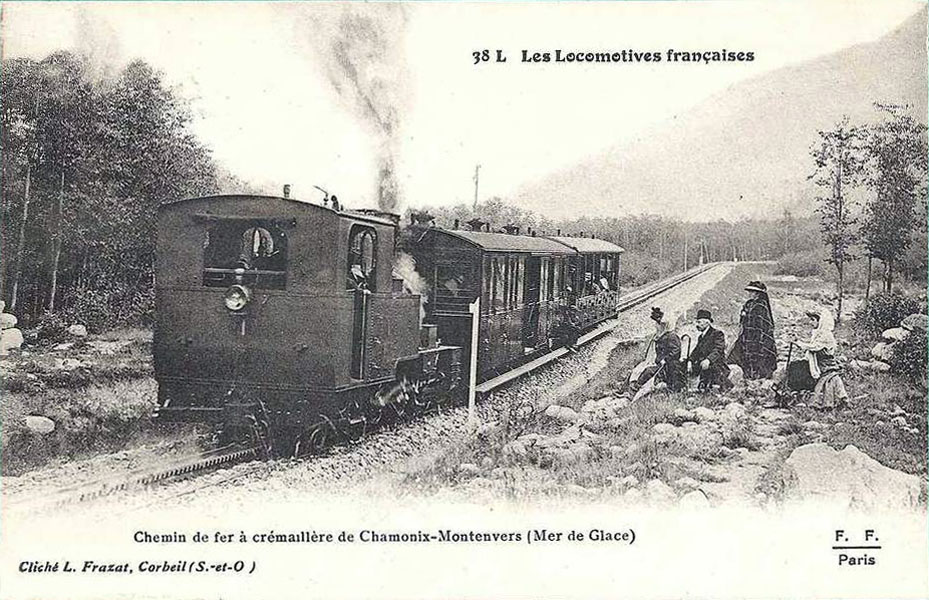
The Montenvers rack railway was planned from 1902, built from 1906, and reached its final terminus in 1909. It replaced a large part of the mule journey with an engineering route through steep terrain, turning an already celebrated excursion into a much more accessible one.
.jpg)
The railway did more than shorten a trip. It expressed a new Alpine idea: extraordinary places could be experienced by more people, provided the mountains’ scale and difficulty were not forgotten.
1924: a summer resort discovers winter sport
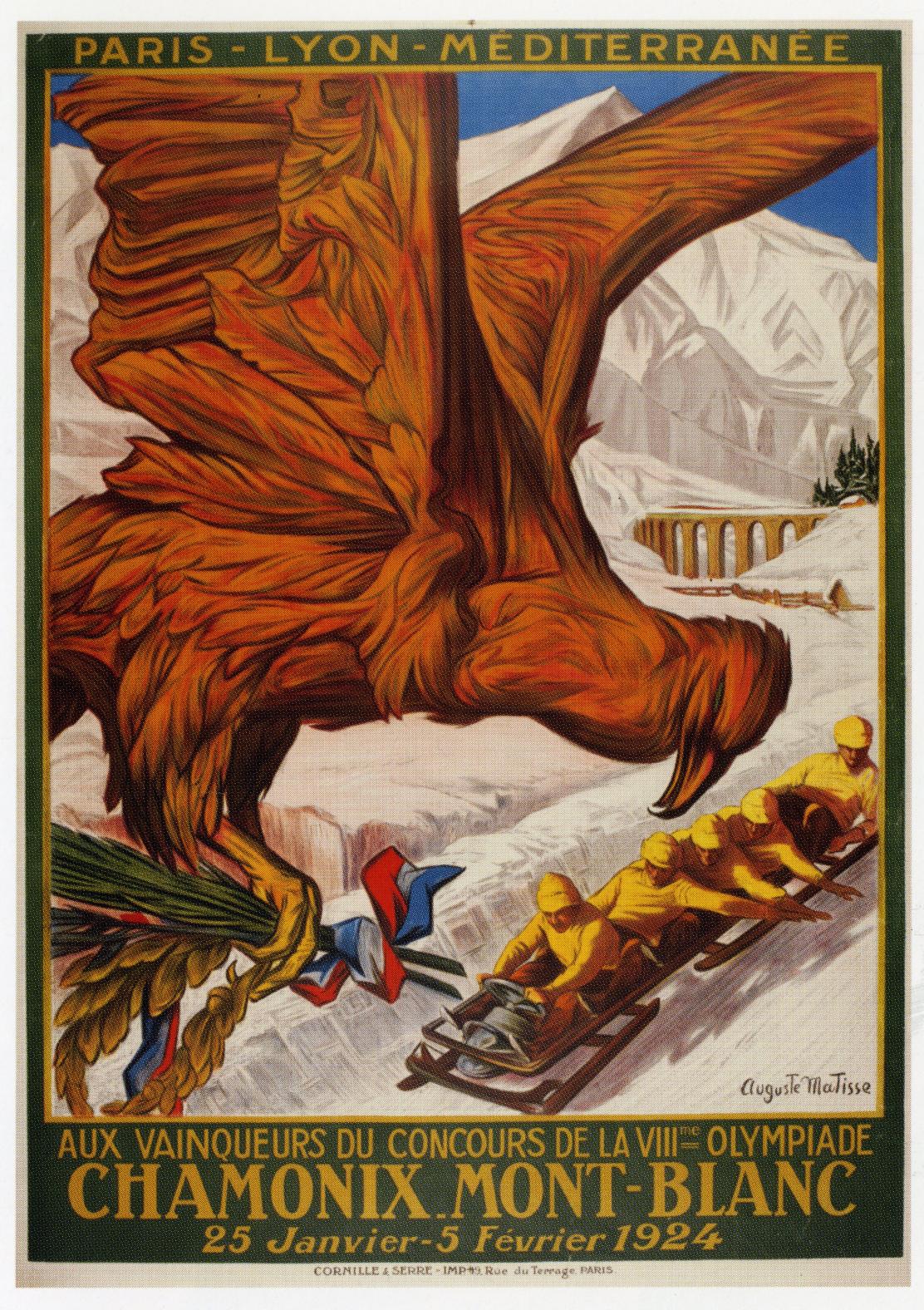
Chamonix had international prestige as a summer mountaineering centre long before skiing became its calling card. The Chamonix Alpine Sports Club was founded in 1905, and a winter-sports competition was held in 1908. The decisive moment came from 25 January to 5 February 1924, when the town hosted the International Winter Sports Week.
That event was later recognised as the first Winter Olympic Games. Sixteen nations and 293 athletes came to Chamonix. There was no alpine skiing on the programme yet: Nordic skiing, ski jumping, ice sports and bobsleigh took centre stage. But the event changed the valley’s international image and accelerated the development of winter infrastructure.

Cable cars, skiing and a living mountain culture
The decades that followed brought the cable cars of the Glaciers, Le Brévent and the Aiguille du Midi, opening new viewpoints and routes. Chamonix developed into a winter-sports destination while keeping its older identity as a place for climbing, guiding and high-mountain exploration.
That mixture remains its defining quality. Chamonix is a town, a valley and several ski areas rather than one enclosed resort. You can board a historic mountain train, look at the retreating Mer de Glace, ride high above the valley or set out with a guide—each experience pointing back to the same long negotiation between people and the Mont Blanc massif.
Chamonix history: key dates at a glance
- 1741 — William Windham and Richard Pococke visit the Mer de Glace; their account draws European attention to the valley.
- 1760 — Horace-Bénédict de Saussure offers a reward for a route to Mont Blanc’s summit.
- 8 August 1786 — Jacques Balmat and Michel-Gabriel Paccard make the first ascent of Mont Blanc.
- 1821 — the Compagnie des Guides de Chamonix is founded.
- 1901 — the railway reaches the Chamonix Valley.
- 1909 — the Montenvers rack railway reaches its final terminus.
- 1924 — Chamonix hosts the event later recognised as the first Winter Olympic Games.
Cover image: early visitors on the Mer de Glace near Montenvers, c. 1900. Public domain, anonymous author, via Wikimedia Commons.
